
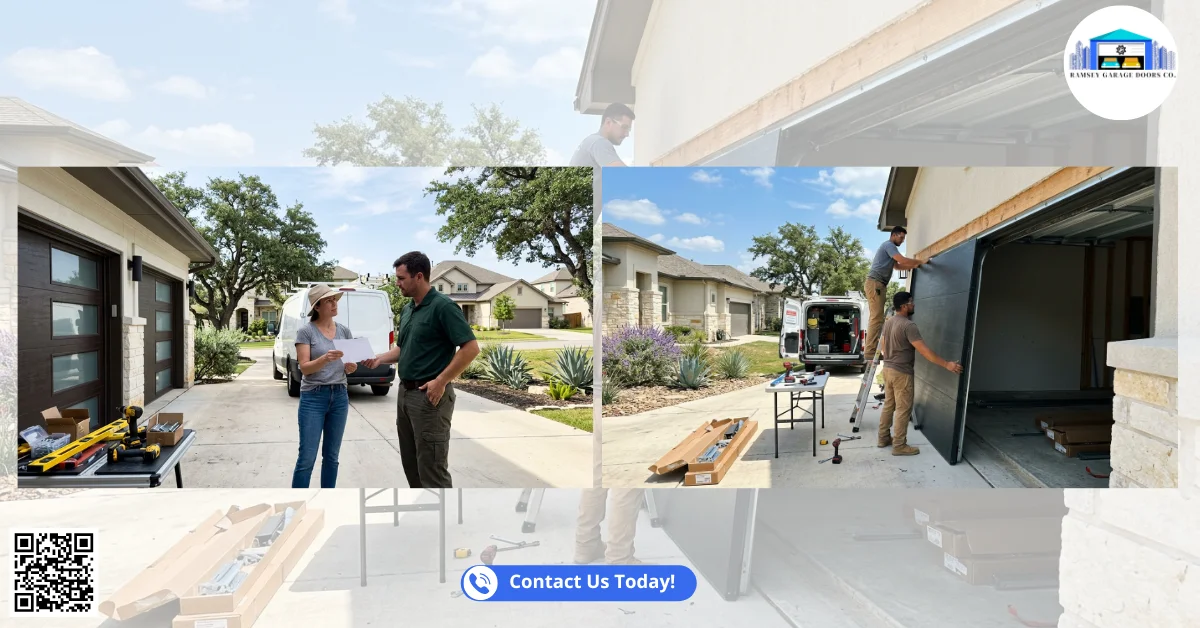

Every homeowner in Central Texas eventually looks out at their driveway and asks the same big question: "How much is a new garage door going to cost me?"
Whether your current door was battered by a severe Texas hailstorm, or you are simply tired of the loud, grinding noise waking up your neighbors in Travis County, replacing your garage door is one of the smartest investments you can make. In fact, real estate experts consistently rank garage door replacement as one of the top home improvements for generating a high return on investment (ROI).
A1 Garage Door
But pricing is not always simple. If you search online, you will see numbers all over the place. Some sites say you can get a door for a few hundred dollars, while others quote thousands.
As a professional garage door technician with 15 years of hands-on field experience right here in Central Texas, I am here to pull back the curtain. At Ramsey Garage Doors Co., we believe in complete transparency. In this ultimate guide, we will break down every single penny that goes into garage door installation in Austin, Texas. We will cover sizes, materials, insulation requirements for the hot Texas climate, hidden labor costs, and real-world installation scenarios so you can budget with absolute confidence.
The Average Cost of Garage Door Installation in Austin, TX
Before diving into the fine details, let us look at the broad numbers. In the Austin metropolitan area, the total cost for a professionally installed garage door typically ranges from $900 to $4,500+.
Why is that window so wide? Because a basic, uninsulated single-car steel door for a rental property in North Lamar requires a completely different budget than a custom, insulated cedar wood carriage door for a luxury estate in West Lake Hills.
Here is a quick snapshot of what Austin homeowners generally pay for standard professional installations, including the door panels, tracks, springs, hardware, and labor:
Garage Door Type & Size | Average Price Range (Installed) |
Single-Car Door (8'x7' or 9'x7') - Basic Steel | $900 – $1,600 |
Single-Car Door (8'x7' or 9'x7') - Insulated Premium | $1,400 – $2,500 |
Double-Car Door (16'x7') - Standard Steel | $1,600 – $2,800 |
Double-Car Door (16'x7') - Insulated Premium | $2,200 – $3,900 |
Custom / Semi-Custom (Wood, Glass, Carriage) | $3,500 – $8,000+ |
Technician Note: These average pricing models include the removal and disposal of your old, heavy door. When comparing quotes from different local overhead door companies, always ask if disposal fees are included, or if they are going to tack on an extra $100 fee at the end of the job!
HomeGuide
Breaking Down the Cost Factors
To understand where your money is going, you have to look at the project as a collection of individual choices. When we build a quote for a homeowner on Burnet Road or out in Round Rock, we look at five primary factors.
1. Garage Door Size (Single vs. Double vs. Custom)
Size is the most obvious starting point. More material means a higher price tag.
Angi
- Single-Car Doors: Usually measuring 8x7, 9x7, or 10x7 feet. These are perfect for single-bay garages or homes that use two separate small doors instead of one large one.
- Double-Car Doors: Usually measuring 16x7 or 18x7 feet. These allow two vehicles to enter the same bay simultaneously. A single 16x7 door is almost always more affordable than buying two separate 8x7 doors because you only need one set of tracks, one opener, and less total installation labor.
- Custom Sizes: If you own an older home in the Hyde Park historic district, or a modern home with high ceilings for an RV or boat lift, you might have custom architectural openings (like 8 feet high or custom widths). Custom tracks and specialized panel manufacturing can add 20% to 50% to your base material costs.
2. Material Choice
The material you pick defines your garage door's durability, maintenance schedule, and overall visual appearance.
Steel Garage Doors
Steel is the absolute king of the industry. It is highly durable, affordable, and incredibly low-maintenance. Basic single-layer steel doors start on the lower end of the pricing spectrum. However, if you upgrade to triple-layer steel (steel + insulation + steel backing), prices rise. Steel doors can be stamped to look like traditional raised panels or sleek modern flush designs.
Aluminum and Glass Garage Doors
If you love the modern farmhouse aesthetic or contemporary architecture found in East Austin, full-view aluminum and glass doors are a stunning choice. They feature heavy-duty aluminum frames holding large glass panels (clear, frosted, or tinted). Because these doors require tempered safety glass and specialized reinforcing structural frames, they are premium products, typically running between $2,500 and $7,500+ depending on the size.
Wood Garage Doors
Nothing matches the rich, natural beauty of real wood like Western Red Cedar, Redwood, or Mahogany. These doors look incredible on Texas Hill Country style homes. However, real wood is heavy, requires routine painting or staining every two years to prevent rot from humid Texas summers, and carries a high price tag. Real wood doors usually start around $3,000 and can easily exceed $8,000 for intricate, heavy carriage designs.
Composite / Faux Wood Garage Doors
Want the beautiful look of real wood without the intense maintenance and high price? Composite doors use a durable steel core topped with a moisture-resistant fiberglass or polymer overlay molded from real wood pieces. They do not rot, warp, or split, and they cost significantly less than solid wood, averaging $2,000 to $5,500.
3. Insulation and R-Value (Why it Matters in Austin)
If there is one upgrade I passionately recommend to every single homeowner in Central Texas, it is insulation.
An uninsulated garage door is essentially a giant radiator. On a blistering 103°F August afternoon in Austin, a non-insulated metal door can reach internal temperatures of over 130°F. That heat transfers directly into your garage, cooking your stored tools, threatening your car battery, and forcing the air conditioner in the adjacent living spaces to work twice as hard.
When shopping for an insulated door, you will see a measurement called an R-value. The higher the R-value, the better the door is at resisting heat transfer.
- Single-Layer (No Insulation): Just a sheet of steel. Cheapest option, but provides zero thermal protection.
- Double-Layer (Polystyrene/Styrofoam): A layer of vinyl-backed Styrofoam panels is inserted into the interior channels of the steel panels. This offers moderate protection (R-value around 5 to 9) and is great for budget-conscious buyers.
- Triple-Layer (Polyurethane/Foam-In-Place): Liquid polyurethane foam is injected between two layers of steel, expanding to fill every single crevice. This creates an incredibly dense, solid door with exceptional thermal properties (R-value of 12 to 19+).
Investing an extra $300 to $700 for a high R-value polyurethane insulated door pays for itself over time by lowering your household energy bills and making your garage a usable workspace year-round.
4. Garage Door Styles and Architectural Designs
The structural style of your door can completely transform your home's curb appeal. The three most popular styles in the Austin market include:
[Traditional Raised Panel] --> Timeless, economical, fits almost any neighborhood.
[Carriage House Style] --> Rustic, charming, looks like old-fashioned swinging barn doors.
[Modern Flush / Long Panel] --> Sleek, clean lines, perfect for contemporary architecture.
Traditional Raised Panel: This is the standard square or rectangular pattern door you see in almost every suburban neighborhood. It is mass-produced, making it the most cost-effective option.- Carriage House Doors: These doors mimic the look of historic swing-out barn doors but open vertically on regular overhead tracks. They often feature decorative iron handles, faux hinges, and beautiful top windows. Expect to pay a $400 to $1,500 premium for this style.
- Modern Flush or Slatted Panels: Clean, flat panels without deep texturing. These look incredible on modern homes and often feature narrow, vertically stacked windows down one side.
Labor and Local Installation Expenses
When you look at a professional quote for a garage door installation, you are not just paying for the physical product. You are paying for precision engineering, specialized tools, and heavy-duty safety training.
On average, professional labor costs account for $300 to $800 of the final invoice. Here is exactly what an experienced two-man crew does during a standard three-to-five-hour installation job:
Networx
- System Takedown: Safely releasing the extreme tension on the old springs, unbolting the old panels, and tearing down the worn-out wall tracks.
- Framing & Track Inspection: Inspecting the wood framing around the door opening (the jambs) for dry rot or structural sagging. If the wood is rotten, it must be replaced before installing the new door.
- Track and Radius Setting: Mounting the new vertical and horizontal tracks. This step requires absolute precision. If the tracks are even a quarter-inch out of alignment, the door will bind, squeak, and cause premature wear on the roller bearings.
- Panel Assembly: Setting the new panels into the tracks one by one, securing the heavy-duty hinges, and reinforcing the top panel with a steel strut so it does not buckle when pulled by an automatic opener.
- Spring System Engineering: Installing the torsion or extension springs. This is the most dangerous part of the job. Torsion springs must be wound tightly using specialized steel winding bars to counter-balance the exact weight of the door.
- Testing and Tuning: Balancing the door perfectly. A properly balanced garage door should easily stay put halfway open when lifted by hand, requiring only a few pounds of manual pressure to lift completely.
Secondary Associated Costs to Consider
When planning your budget, don't forget to account for these common secondary expenses that often pop up during a full garage door replacement project.
Automatic Garage Door Openers
If your old garage door opener is more than 10 or 15 years old, it is highly recommended to replace it at the same time as your door. Older openers lack modern security encryption and quiet motor technology.
- Chain-Drive Openers: The traditional choice. Reliable and highly durable, but noisy. Cost: $350 – $550 installed.
- Belt-Drive Openers: Uses a steel-reinforced rubber belt instead of a metal chain. Incredibly smooth and virtually silent—perfect if your garage is directly underneath a bedroom. Cost: $450 – $750 installed.
- Wall-Mount (Jackshaft) Openers: Mounts directly to the wall beside the torsion shaft instead of the ceiling. This frees up overhead storage space and is ideal for high-lift tracks or cathedral ceilings. Cost: $600 – $900 installed.
Cedar Park Overhead Doors
Modern smart openers, like the LiftMaster units we install at Ramsey Garage Doors Co., feature built-in Wi-Fi, smartphone control via apps like myQ, and integrated LED security cameras.
ServiceBasix Garage Doors
Decorative Hardware and Windows
Adding windows to the top section of your garage door floods your dark garage space with natural sunlight and instantly elevates your home’s exterior look. Adding windows usually increases the base price of the door panels by $300 to $900, depending on whether you choose standard clear glass, frosted privacy glass, or insulated glass panels. Magnetic or bolt-on decorative handles and hinges add a quick, inexpensive touch of style for around $50 to $150.
Low-Headroom Tracks or Special Clearance Track Configurations
If your garage ceiling is exceptionally low (less than 10 to 12 inches of clearance above the top of the door opening), standard tracks will not fit. Technicians must install a dual-track low-headroom system to allow the top panel to clear the ceiling header safely. This hardware modification usually adds $100 to $250 to the total labor and material cost.
Real-World Scenarios and Price Estimates
To give you a clearer picture of how these choices play out in real life, let us walk through three common scenarios we see every single week when working with homeowners across the Austin area.
Scenario A: The Budget-Friendly Rental Refresh
- The Goal: A homeowner renting out a property near the University of Texas campus needs to replace a severely dented, uninsulated single-car garage door quickly and cheaply.
- The Selection: An uninsulated, standard 8x7 traditional raised-panel steel door in basic white. They choose to keep their existing, working chain-drive opener.
- The Cost Breakdown:
- 8x7 Steel Door Panels & Standard Track Hardware: $650
- Professional Labor (Removal, Installation, Disposal): $350
- Total Project Cost: $1,000
Scenario B: The Suburban Family Upgrade
- The Goal: A family living in a master-planned community in Avery Ranch wants to replace an aging, loud 16x7 double-car door with something energy-efficient and quiet to help lower their summer electricity costs.
- The Selection: A triple-layer, polyurethane-insulated steel door (R-value 13.0) with an elegant carriage house stamped pattern and elegant top window inserts. They also decide to replace their old loud opener with a whisper-quiet belt-drive smart opener.
- The Cost Breakdown:
- 16x7 Insulated Steel Door with Windows: $2,100
- Premium Smart Belt-Drive Opener: $550
- Professional Labor (Full system tear-out, track replacement, spring winding, opener configuration): $650
- Total Project Cost: $3,300
Scenario C: The Luxury Modern Masterpiece
- The Goal: A homeowner building or remodeling a high-end contemporary home overlooking Lake Austin wants a show-stopping modern aesthetic.
- The Selection: A full-view, clear-anodized aluminum frame door with tempered frosted glass panels to provide privacy while letting daylight shine into their custom home gym garage bay.
- The Cost Breakdown:
- 16x7 Premium Aluminum & Glass Custom Door: $4,800
- Wall-Mounted Jackshaft Space-Saving Opener: $750
- Specialized Heavy-Duty Labor & Custom Tracking: $850
- Total Project Cost: $6,400
DIY vs. Professional Garage Door Installation
With so many helpful home improvement videos available online, it can be tempting to order a garage door kit from a big-box retail store and try to tackle the installation yourself over a weekend. However, as an industry professional who has seen the messy aftermath of many failed DIY attempts, I strongly advise against it for several critical reasons.
Extreme Safety Hazards
The garage door system is easily the single largest, heaviest moving object inside your home. The torsion springs that balance this heavy weight operate under an incredible amount of mechanical tension.
To wind a torsion spring, a technician must insert steel winding bars into the spring cone and manually wind it tight. If a DIYer uses the wrong tool, or if a winding bar slips out of their hand, the stored mechanical energy releases instantly. This can break bones, sever fingers, or cause catastrophic facial injuries. It simply is not worth the risk to your personal health.
Warranty Protection
Most major high-quality manufacturers, such as C.H.I. Overhead Doors, Clopay, and Amarr, offer robust long-term or lifetime warranties on their panels and hardware. However, these manufacturers explicitly state in their fine print that the product warranty is completely voided if the door is not installed by a certified, licensed professional garage door dealer. If you scratch a panel or bend a track during a DIY install, you are stuck covering the replacement cost out of your own pocket.
Structural Integrity and Longevity
A professional technician understands the intricate physics of a counterbalanced overhead door system. We know exactly how to adjust the track pitch so the door forms a perfect weather-tight seal against your concrete garage floor, keeping out Texas bugs, dust, and driving rain storms. A poorly aligned DIY door will constantly grind, put unnecessary structural strain on your expensive automatic opener motor, and can prematurely snap its lift cables within the first few years of operation.
To learn more about construction safety and professional trade compliance standards, check out the guidelines provided by the Occupational Safety and Health Administration (OSHA).
Actionable Troubleshooting and Maintenance Insights
Once your new garage door is successfully installed, you want to protect your financial investment so it lasts for decades to come. Think of your garage door exactly like a vehicle: regular preventative maintenance prevents expensive breakdowns down the road.
Here is a simple, highly effective preventative maintenance checklist that you can perform every six months:
The Visual Inspection Test
With the garage door closed, stand inside your garage and closely inspect the hardware. Look for frayed steel lift cables, loose structural bolts on the hinges, worn-out plastic rollers, or spaces where light peaks through the black rubber weather stripping. If you catch a fraying cable early, you can replace it for a fraction of the cost before it snaps completely and drops your door sideways onto your car hood.
The 15-Minute Lubrication Routine
Never use heavy grease or generic WD-40 on your garage door tracks! WD-40 is a degreaser, not a true lubricant; it will actually attract dirt, road grime, and dust, turning into a sticky paste that jams up your rollers.
Instead, buy a can of high-quality synthetic silicone spray or lithium-based grease. Spray a light coat onto the metal roller stems, inside the roller bearings, on each section hinge, and across the entire length of the overhead torsion springs. Regular lubrication reduces friction, stops annoying squeaks, and adds years of life to your mechanical components.
Testing the Vital Safety Reversal System
For the safety of your family, pets, and vehicles, automatic garage door openers are federally mandated to feature built-in safety systems. You should test these two systems at least twice a year:
[Photo-Eye Sensors] --> Projects an invisible beam across the floor. If blocked, door reverses.
[Mechanical Reversal] --> If the door strikes an object while closing, it safely reverses.
The Photo-Eye Sensor Test: Start closing your garage door using your wall button. Wave a long broom handle through the path of the invisible infrared beam running between the two little plastic boxes located about six inches above the ground on either side of the door tracks. The door should stop instantly and immediately reverse back up to the open position. If it doesn't, your safety sensors are misaligned or defective.- The Mechanical Block Test: Place a solid 2x4 piece of wood flat on the concrete garage floor directly underneath the center of the door opening. Press the button to close the door. When the bottom edge of the door strikes the wood block, it should sense the mechanical resistance, stop closing within two seconds, and automatically run back up. If the opener motor keeps straining and grinding against the wood block without reversing, the force limit settings on your opener unit need immediate professional adjustment.
To understand more about the federal consumer safety laws governing automatic garage doors, you can read the official regulations enforced by the Consumer Product Safety Commission (CPSC).
Frequently Asked Questions (FAQs)
Can I just replace the damaged panels of my garage door instead of buying a whole new system?
Yes, panel replacement is completely possible if the rest of your door's tracking system is in good shape and the manufacturer still fabricates that exact model. However, if your door is over ten years old, the cost of sourcing a single matching panel plus the labor to install it often comes close to the price of a brand-new, modern door system.
Do I need a building permit from the City of Austin to replace my garage door?
In the City of Austin, a standard residential garage door replacement does not require a formal building permit as long as you are not altering the structural header or widening the rough wood opening. However, if your home is located within a strict local Homeowners Association (HOA), you will likely need to submit a quick design review form to ensure your new door color and architectural style match the neighborhood guidelines.
Why is my newly installed garage door making a loud popping sound when it opens?
A loud popping or snapping sound usually indicates that a torsion spring is binding on its center shaft, or a section hinge is tight and catching as the door rounds the curved radius of the track. This is common during the initial break-in period of a new door, but it should be quickly adjusted by your installer to prevent premature track wear.
How long does a standard professional garage door installation take from start to finish?
For a standard single-car or double-car garage door replacement, an experienced two-man installation crew will typically complete the job in three to five hours. If your project requires an entirely new smart opener system installation or custom high-lift tracking adjustments, plan for the process to take closer to a full day.
Final Thoughts
Investing in a new garage door is one of the easiest ways to radically boost your home's curb appeal, enhance your home security, and protect your house from the extreme Texas elements. While the garage door installation cost in Austin, TX, can vary wildly based on your choice of size, insulation quality, and style, understanding these upfront factors ensures you will never be caught off guard by a surprise quote.
When you are ready to update your home, skip the dangerous DIY stress and work with a reputable, licensed local team that understands the specific layout and climate needs of Travis County properties.
How Can Ramsey Garage Doors Co. Help You?
Are you ready to elevate your home's curb appeal and lock in premium climate protection with a stunning new garage door? Let our trusted team at Ramsey Garage Doors Co. handle everything for you safely and professionally.
With 15 years of dedicated field experience across the Austin area, we pride ourselves on delivering honest pricing, flawless track alignments, and rock-solid customer warranties. Whether you are dealing with an emergency broken spring, want an energy-saving polyurethane insulated door, or need a sleek custom modern glass design, we are ready to serve you.
Give us a call or stop by our local office today to book your free, no-obligation precision quote!
- Company Name: Ramsey Garage Doors Co.
- Business Address: 5502 Burnet Rd, Austin, TX 78756
Phone Number: (512) 675-6884
